
Daily Routine and Schedule
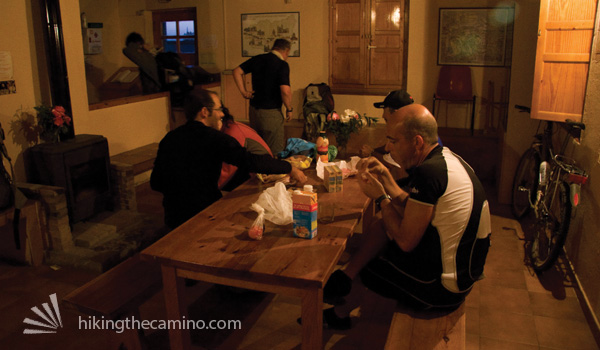
The typical Camino day begins very early, as the eager early-risers begin rustling their bags as early as 5am! Quickly pack your backpack, brush your teeth, put your shoes on and start walking. Stop at a cafe for breakfast (typically coffee and a pastry). Keep walking, with a long break for lunch (sandwiches and fruit from the grocery store is a popular choice, or stop at a cafe for a hot lunch).
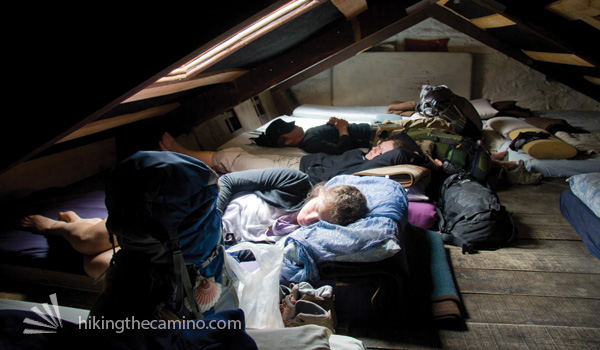
Arrive to your destination around 1 or 2pm. Check into the albergue and claim a bunk. Take a shower. Wash your dirty hiking clothes and set them out to dry. Take a nap. Stroll around town and visit any interesting sites such as churches or museums. Stop by a grocery store if you needs snacks for the next day. Around 7pm, head to a local restaurant for a “pilgrim menu,” a three-course meal that typically costs around €10 including wine and dessert. Some albergue serve dinner menus family-style, a great way to get to know your fellow travelers. Most albergue set a “lights out” time around 10pm. Pack your backpack as much as you can the night before to minimize the time you need in the morning. Sleep in your hiking clothes.
Business Hours
Normal business hours in Spain are approximately 9am-2pm and 5pm-8pm, with the famous long afternoon break, the siesta. In small villages, hours may be even more limited. Siesta time is very important to remember if you are planning on buying groceries or pharmacy items upon arrival after a day of walking. It can be very frustrating to arrive hungry and exhausted at 2pm and realize you can’t buy any food (except more expensive bar fare) for three more hours!
Bars along the camino generally open early, at least during high season, for the brisk business of pilgrim breakfast and cafe con leche. It’s a good idea to have some snacks with you in the morning, in case you do not find an open cafe for several hours.
On Sundays almost all shops are closed, though some small shops will open up for a short time for hungry pilgrims. Plan ahead if you are preparing your own meals. In big cities, such as Burgos and Leon, large chain groceries stores are often open through the siesta hours, but rarely on Sundays. Pharmacy hours in small towns and villages can be very limited (sometimes only one day per week for a few hours), whereas in cities there are 24-hour pharmacies available. Restaurants and bars are open on Sundays, as well as museums.
Post office hours in cities are generally 8:30am-8:30pm, with reduced hours on Saturdays and closed on Sundays. Small town post offices are more likely only open 8:30am-2:30pm. Many museums in Spain are closed on Mondays.
Spanish National Holidays
Each province of Spain has their own regional holidays, however, there are nine national holidays observed throughout Spain. Each region is allowed a maximum of 14 public holidays per year. There are also hundreds of regional and local festivals and saints days.
- January 1: New Year’s Day, Año Nuevo
- March-April (varies, Friday before Easter): Good Friday, Viernes Santo
- May 1: Labor Day, Dia del Trabajador
- August 15: Assumption Day, Día de la Asunción
- October 12: Spanish National Holiday, Fiesta Nacional de España
- November 1: All Saints Day, Día de Todos los Santos (also Day of the Dead)
- December 6, Constitution Day, Día de la Constitución
- December 8, Immaculate Conception Day, Día de la Inmaculada Concepción
- December 25: Christmas, la Navidad
Perhaps the most famous regional holiday in Spain is the San Fermínes festival in Pamplona, celebrated July 6-14 of each year. The albergues in Pamplona are not open during San Fermin and all accommodations become very expensive and most are booked months in advance..
Cash & ATM Machines
The best way to get cash in euros along the Camino is by using ATMs (bancomat or cajero automático in Spanish). ATMs are available in every big city and most medium to large towns. All machines have an option to complete the transaction in English. Our guidebook shows a symbol for each town which has an ATM. Plan your cash carefully so you don’t end up running out of cash in a tiny village with no ATM.
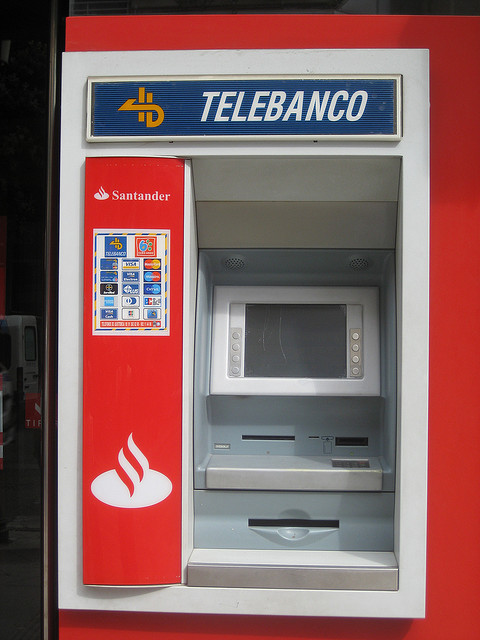
Ask your bank if any ATM fees apply for international withdrawals. Many banks charge from $1-5 per transaction, but others have no fees, such as Charles Schwab, which will even refund any charges from international banks. Most banks have a daily withdrawal limit (usually $200-300). You can often raise the daily limit by calling your bank. Occasionally, people have the problem of the machine “eating” their ATM card. For this reason, it can be a good idea to only use ATM cards during business hours so that the card can be returned. Be sure to memorize your PIN number (usually four digits), and never carry the PIN in your wallet with your ATM card.
You probably want to plan to withdraw cash around once a week (€200-300) so you don’t end up carrying a large amount of cash that could get stolen or lost. It can be a good idea to stash one large bill in a hidden place separate from your wallet to use in case of emergency if your wallet would be lost or stolen.
Traveler’s checks and Currency Conversion
Traveler’s checks are no longer common internationally and can be time consuming and frustrating to cash. You could bring some cash in dollars or other currency to convert to euros, but you will pay a commission to the money changer (rates vary and are often highest at the airport.)
Credit Cards
Credit cards are not accepted in most albergues, smaller restaurants and grocery stores, but are accepted in larger grocery stores and hotels. Most US credit cards charge a currency conversion fee of about 3% if used abroad. If you travel abroad frequently, it may be worth applying for a credit card that does not charge any conversion fee, such as Capital One or Chase Sapphire Preferred.
Remember to alert your credit card company of your travels so they don’t shut off your card due to international activity. Keep credit card phone numbers with you so you can cancel them quickly in case of theft or loss. Be careful with entering credit card numbers or any sensitive information on unsecured internet connection or at internet cafes. Be warned that cash advances from credits cards have very expensive fees.