When is the best time to walk the Camino?
Choosing your dates
Your choice of dates will likely depend on what is available with your schedule and commitments, and it’s possible to take the journey during any month of the year. The two main factors in determining when to go are climate and volume of hikers, each with their respective advantages and disadvantages. For most camino routes, May, June, September and October are often considered the best months to walk, as temperatures are moderate and hiker volume is lower than in summer, reducing the stress of competitions for beds. On some routes, these same climate and service availability concerns mean that walking in the summer is most advantageous.
If you find yourself in a large clump of pilgrims, consider taking a rest day or walking to one of the smaller albergues between the major cities and sites. If there are crowds no matter what and you are struggling to find a bed, consider using private albergues and calling to reserve the day before you plan to arrive.
Another way to walk a full camino route, if you do not have enough time to walk the route in one go, is to split the trail up into sections, and walk them in different trips. Many pilgrims walk one or two weeks per year, completing an entire route over the course of several years. Others skip a few days or weeks in the middle by taking a bus or train, in order to walk the highlights of the route in a shorter time. Others simply begin closer to Santiago and walk the last week or few days in Galicia. Be aware that these sections, especially in high season, are the most popular and often over-crowded.
Summer (June-August)
By far the most popular time to walk the Camino is summer, particularly June-August, which accounts for more than half of the yearly pilgrim traffic. St. James Day is July 25, and many pilgrims try to time their walk to arrive on this day. During Holy Years, when July 25 falls on a Sunday, the Camino (particularly the Camino Francés) becomes an overpacked madhouse and swells to almost double the pilgrims! No need to worry just yet, the next Holy Years aren’t until 2021, 2027, and 2032. Sometimes there is competition for beds because of overcrowding, particularly on the last 100 km/60miles. The weather, especially in open inland areas with little shade—like the Meseta—can be beastly hot during summer. Long days require starting early and resting mid-day. Some hikers walk later in the evening, as the sun sets as late as 10pm in Spain.
Despite the traffic and warmer temperatures, summer offers particular advantages on certain routes. On the first half of the Camino Primitivo, you may encounter snow into late April at higher elevations, and parts of the trail can be extremely muddy through spring. On coastal routes, such as the coastal Camino Portugués route and the Camino del Norte, some services are very seasonal and most likely to be open in July/August—though prices for private accommodations are often much higher than during the rest of the year.
Spring and Fall (September-October, April-May)
The shoulder seasons of spring and fall are increasing in popularity because of milder weather and greater availability of beds in accommodations. Spring is a wonderful time to encounter wildflowers, migratory birds and cooler weather, though be prepared for plenty of rain and chilly temperatures at night. Late September through October offer pleasant walking weather and is the time of wine harvest for any oenophile (wine lover) pilgrims. We recommend these seasons as a good option to beat the crowds and summer heat; however, the spring months, in particular, can still be very busy, and toward the edges of the spring and fall (especially on less-frequented routes) some accommodations may be seasonally closed.
Winter (November-April)
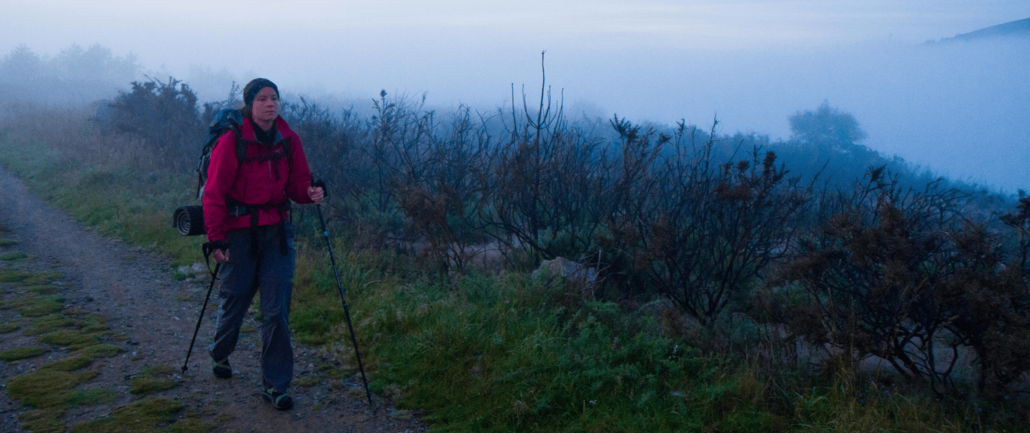
Winter is the least popular season for camino walking, with many albergues, cafes and attractions closed and with quite cold and stark weather. Those albergues that do remain open do not always have heat! Winter pilgrims may need to stay in private accommodations more often, adding expense. Mountain passes may be covered in snow and weather is unpredictable (it’s not advised to walk Napoleon’s Route on the first day of the Camino Francés to cross the Pyrenees or to walk the the Camino Primitivo before Lugo). There are fewer daylight hours. Snow and rain may obscure trail markers, making it more difficult to stay on the right path. Pilgrims need to carry heavier packs to accommodate warmer clothing and sleeping bag.
However, winter pilgrims often report enjoyment of the solitude and friendship formed with other hearty walkers enduring the challenging weather. Plan more days into your schedule to deal with any unexpected circumstances such as weather, albergue availability and heavier packs. Check daily to see what accommodation options are available for your nights stay.