
Camino Guidebooks - Village to Village Guides
  • Camino Guides
    • Camino Francés Guide
    • Camino Francés Maps
    • Camino Finisterre Guide
    • Camino Portugués Map Guide
    • Camino del Norte Map Guide
    • Camino Primitivo Map Guide
    • Camino Inglés Map Guide
    • Way of St. Francis
    • Book Reviews
    • Guidebook Website Links
  • Routes
    • About the Camino de Santiago
    • Camino Francés
    • Camino Finisterre
    • Camino Portugués
    • Camino del Norte
    • Camino Primitivo
    • Camino Inglés
    • Way of St. Francis
  • Gear
  • Plan
    • Camino FAQ
    • Choosing a Route
    • Sample Itineraries
    • When to Go
    • How to Get There
    • How to Pack for the Camino
    • Camino Gear Guide
    • Phone & Internet
    • Budgeting & Money
    • Pilgrim Passport & Compostela
    • Pilgrim Associations & Online Resources
    • Tours
    • Recommended Reading
    • Families, Children & Women
  • On the Way
    • Camino FAQ
    • Daily Routine
    • Sleeping: Albergues, Hotels, Camping
    • Food and Water
    • Maps, GPS & Trail Marking
    • Luggage Transfer
    • Spanish Phrasebook for the Camino
    • Health and Fitness
    • Bikes & Horses
  • About
    • About Village to Village Guides
    • Contact Us
    • LNT & Responsible Tourism
    • For Bloggers and Journalists
    • Disclaimer
  • Click to open the search input field Click to open the search input field Search
  • Menu Menu
  • Link to Facebook
  • Link to X
  • Link to Instagram
  • Link to Pinterest
blog

What is the Camino de Santiago?
August 16, 2012/1 Comment/in Camino information/by anna

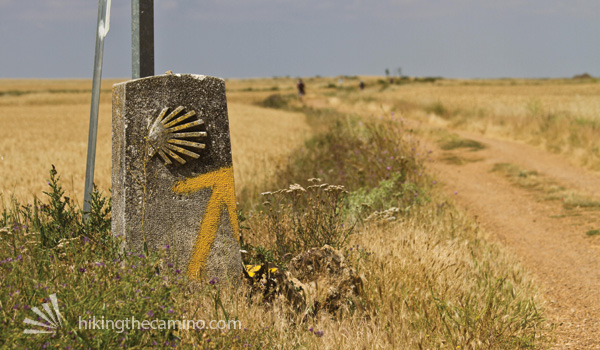
So what is this Camino de Santiago we are going to be walking? Perhaps it is more apt to ask, what are the Caminos of Santiago?

  • Camino is a Spanish word, meaning “path,” “trail,” or, more generally “way.”
  • Santiago is the Spanish term for Saint James, the disciple of Jesus.

The name of the trail is often translated in English as “The Way of Saint James.” The modern day Camino(s) de Santiago follow various ancient tracks across Spain and end at the cathedral in the city of Santiago de Compostela, the traditional burial place of St. James, recreating the ancient pilgrimage walked by millions throughout the past thousand years.

Today the most developed and popular route is the Camino Francés, or “French route,” traditionally beginning at St-Jean-Pied-de-Port in the French Pyrenees. When most people today talk about the Camino de Santiago, they are referring to this route, made popular in the 2011 Martin Sheen film “The Way“.

The Camino Francés stretched about 800 km (500) miles. There is an amazing system of albergues (pilgrim hostels) every 5-10 km which cost as little as $6/€5 per night. These are dormitory-style accommodations with beds, showers and facilities to wash clothing, some also have a kitchen for preparing meals and other amenities. Many churches feature a special pilgrim Mass of blessing for those on the route.

The Camino is not just for Catholics and not just for Christians, and even in the Middle Ages there was a diverse crew of pilgrims. A 12th-c. song about the Roncesvalles pilgrim hospice said:

“The doors are open to the sick and well
to Catholics as well as to pagans,
Jews, heretics, beggars and the indigent,
and it embraces all like brothers.”

This is the spirit of the Camino which continues to draw pilgrims from all walks of life!


Share this entry
  • Share on Facebook
  • Share on X
  • Share on WhatsApp
  • Share on Pinterest
  • Share on LinkedIn
  • Share on Tumblr
  • Share on Vk
  • Share on Reddit
  • Share by Mail
https://www.caminoguidebook.com/wp-content/uploads/2017/04/header_title-2-300x99.png 0 0 anna https://www.caminoguidebook.com/wp-content/uploads/2017/04/header_title-2-300x99.png anna2012-08-16 06:46:222025-12-31 07:22:31What is the Camino de Santiago?
1 reply
  1. Melicent
    Melicent says:
    August 16, 2012 at 22:36

    I’m going to Europe with my sis AI. This is a journey to a scared place. Starting from Paris, the goal is Santiago de Compostela in Spain.

Comments are closed.

Recent Posts

  • Camino Holiday Gift Guide
  • 9 Ways to Inspire your Friends to Walk the Camino de Santiago
  • Camino del Norte Days 43-45: Arzua to Santiago de Compostela
  • Camino del Norte Day 42: Sobrado dos Monxes to Arzua
  • Camino del Norte Day 41: Miraz to Sobrado dos Monxes

Recent Comments

  • Camino De Santiago A Historical Pilgrimage | Geography Scout on Pilgrim Passport & Compostela
  • Camino de Santiago – Mark's Musings on Planning
  • El Camino de Santiago – Simplemente.Set on Budgeting & Money
  • Tips for Hiking the El Camino de Santiago with Children — Almost Fearless on Planning
  • Spanish Pilgrimage Tips For A Successful Walk Across Northern Spain on Packing for the Camino

Archives

  • November 2017
  • August 2016
  • October 2012
  • September 2012
  • August 2012

Categories

  • Camino del Norte
  • Camino information
  • Camino Tips
  • updates

Camino Routes


  • • Camino Francés Interactive Map
  • • Camino Portugués
  • • Camino del Norte
  • • Camino Primitivo
  • • Camino Inglés
  • • Camino Finisterre

Links for Camino accommodations online, organized by V2V guidebooks stages.

V2V Camino Guides

V2V Mailing List

Search Search

Welcome to Camino Guidebooks by Village to Village Press!

We aim for this website to be a portal into all things Camino, with first-rate practical resources as well as inspiration photos and reflections. We are Camino pilgrims ourselves, having walked and biked various Camino de Santiago multiple various times. We hope our website and guidebooks help others to enjoy the rich experiences of the Camino in life-changing ways, as we have. If you enjoy this website, we think you will also enjoy our Camino guidebooks. This Camino Francés and Finisterre book is chock-full of practical resources, with excellent maps, town amenities, historical information, and prices and amenities of a wide variety of accommodations along the way. In short, this is the guidebook we wish we’d had as pilgrims!

Terms of Use

User assumes all risk and liability for any action in relation to usage of information and routes on caminoguidebook.com and RideWithGPS, including if actions result in injury, death, loss or damage of personal property or other complications. Village to Village Press, LLC, its partners, associates, and contributors accept no liability. Route information and advice is provided as a planning resource only, and is not guaranteed to be accurate or complete, and in no way should replace your own due diligence, research, and safety precautions. All users are advised to check current conditions before embarking on any route, including weather, surface conditions and closures. Users should obey all laws including public and private land usage restrictions and guidelines and carry adequate safety and navigational equipment.

Affiliate Links

Amazon.com and Booking.com affiliate links generate income to keep this site going at no additional cost to you. Thanks for exploring the Camino with us!

© Copyright 2009-2023 -Camino Guidebooks, Village to Village Press, LLC - Enfold Theme by Kriesi
  • Link to Facebook
  • Link to X
  • Link to Instagram
  • Link to Pinterest
Link to: Introducing “Hiking the Camino” (and ourselves) Link to: Introducing “Hiking the Camino” (and ourselves) Introducing “Hiking the Camino” (and ourselves) Link to: Camino del Norte, Trip Log Day 0 (Irún) Link to: Camino del Norte, Trip Log Day 0 (Irún) Camino del Norte, Trip Log Day 0 (Irún)
Scroll to top Scroll to top Scroll to top